First World War
The First World War was the first truly global conflict. From 1914 to 1918, fighting took place across several continents, at sea and, for the first time, in the air. This was war on an unprecedented scale, with battles often lasting months instead of days. In Britain, industry, technology and the population were all mobilised for a conflict that would cost the lives of over ten million soldiers worldwide.
Rival alliances
The First World War saw the Entente Powers – led by France, Russia, the British Empire, and later Italy (from 1915) and the United States (from 1917) – defeat the Central Powers – led by the German, Austro-Hungarian, Bulgarian and Ottoman Empires. Russia withdrew from the war after the revolution there in 1917.
The Western Front
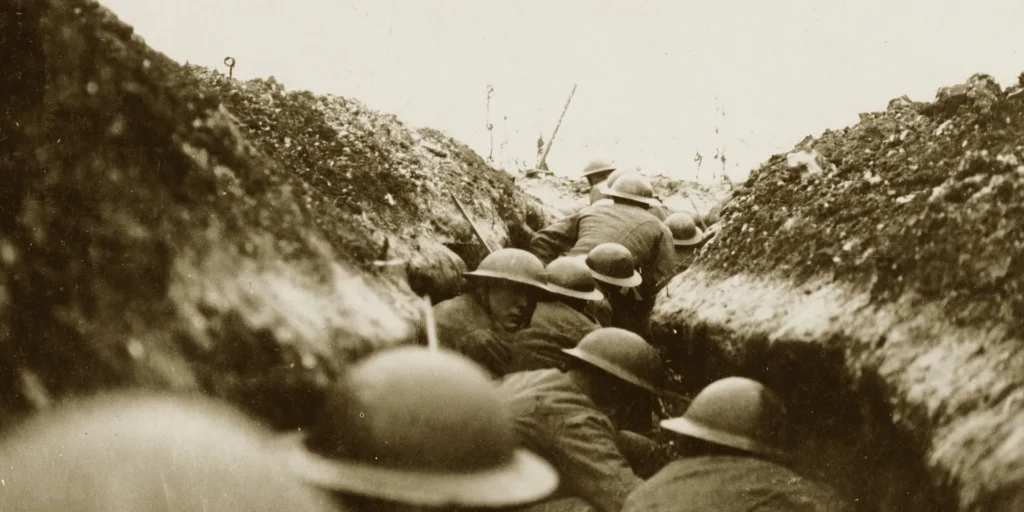
On the battlefields of northern Europe, the British Empire fought against the enemy and the elements along a system of trenches that stretched over 600km (370 miles) from the Channel to the Swiss frontier.
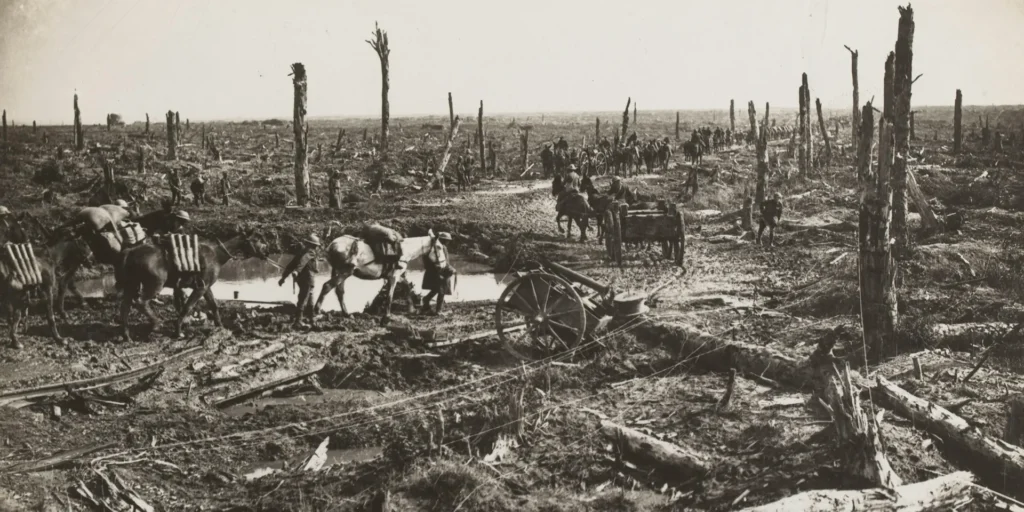
The attritional struggle here transformed the landscape of northern France and Belgium into a lunar mud-scape of shell craters, corpses, abandoned equipment and wire entanglements. Commanders faced the tactical problem of getting troops safely across this fire-swept terrain to penetrate the enemy’s defences.
For most of the war, the front here was locked in stalemate, despite a series of costly offensives. This bitter struggle to overcome the deadlock defined the conflict for many involved. It also decided its outcome, with an Allied breakthrough finally defeating the Germans in 1918.