Ubiquitous: Innovation Redefining the Future of Technology

In an era where connectivity and constant access to information have become essential, Ubiquitous emerges, a startup from Sapienza University of Rome that is revolutionizing the concept of managing applications based on Artificial Intelligence and Computer Vision. The impact generated by the project made the startup the most viewed by users in June on the Knowledge Share platform.
Founded with the goal of bridging current technological gaps, Ubiquitous aims to integrate the power of edge computing into every aspect of our daily lives, making it truly pervasive and accessible everywhere.
But how exactly does this revolutionary technology work, and what are its main advantages over currently available solutions? The Ubiquitous team provided us with a detailed overview, highlighting the key elements that make their proposal unique. We interviewed Luca Maiano – Founder and CTO at Ubiquitous, and PostDoc Researcher Computer Vision at Sapienza University of Rome, with a PhD in Data Science – and Gabriele Proietti Mattia – Founder and CEO at Ubiquitous, and PostDoc Researcher (RTD-A) at Sapienza University of Rome, with a PhD in Engineering in Computer Science. From overcoming technical obstacles to having a clear and ambitious strategic vision for the future, Ubiquitous positions itself as a fundamental player in the technological innovation landscape.
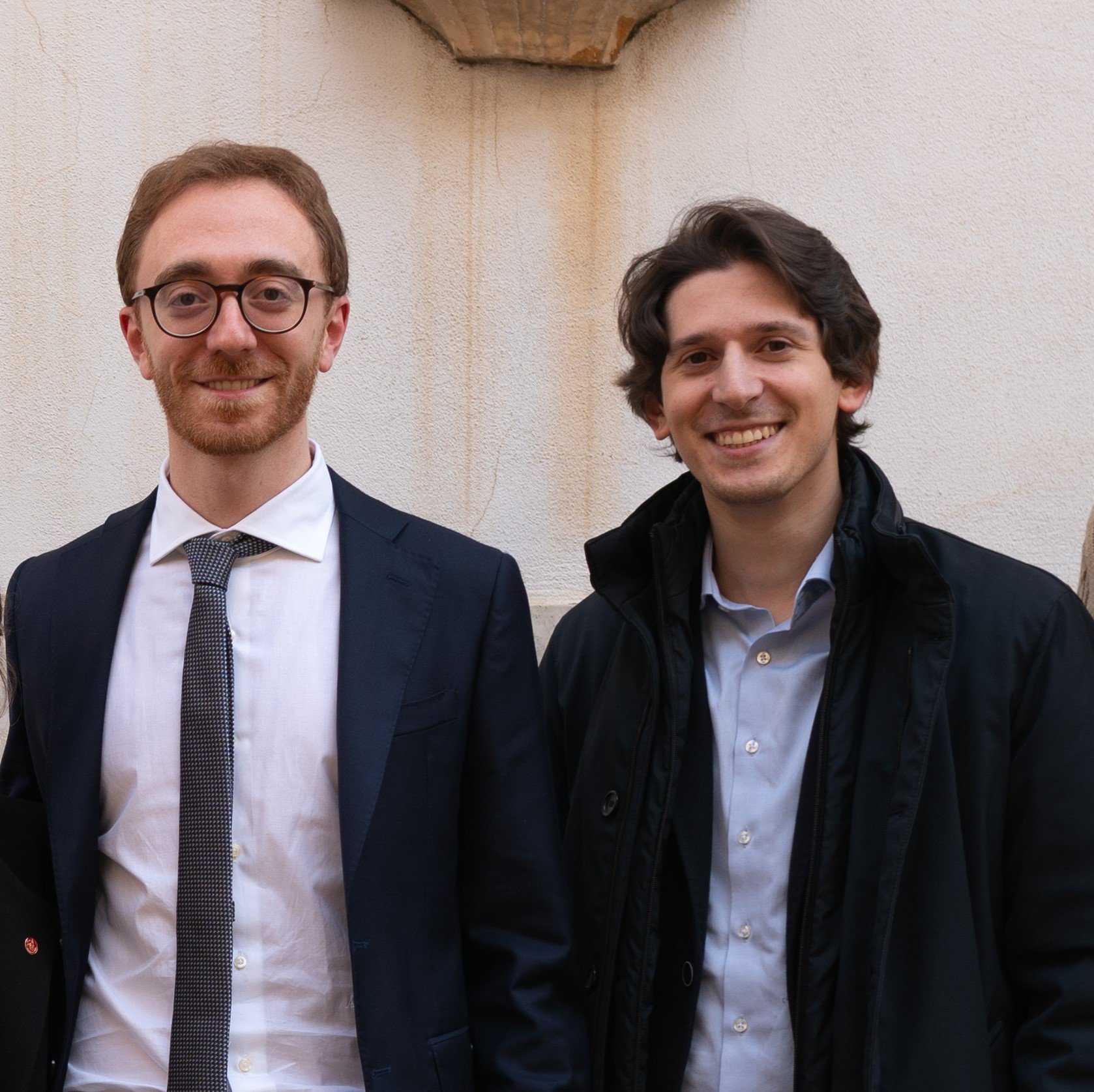
Ubiquitous offers a platform to optimize AI consumption to improve device performance. What is the current scenario in Italy when we talk about AI and Computer Vision? Is it a landscape that is gaining more traction, or does it still not find fertile ground?
Luca Maiano – AI is a hot topic in Italy as well. It’s a trend, but it’s also a sector with a good level of maturity. What we aim to do with Ubiquitous is to address the problem of most AI solutions today being cloud-based. They require centralized servers with significant computing power. They are scalable but have a limitation: they are not adaptable to “real-time” contexts and, therefore, in cases where we need an immediate response. For example, a self-driving car cannot afford waiting times. We cannot wait a few seconds for the data to be sent to the cloud, processed by AI, and sent back.
Therefore, to address this, we propose adopting an edge computing paradigm. This involves using very small devices, about the size of a phone or slightly larger, that are powerful enough to run a good portion of AI algorithms. This allows us to process data directly close to the source, saving time and energy resources.
Gabriele Proietti Mattia – Besides this, the idea is to develop a platform that simplifies building the infrastructure needed for such applications. To process video streams produced by a camera, I will need a system that allows me to monitor and access the cameras remotely and install and update AI solutions that process the data. As of today, if I want to set up such an infrastructure, I necessarily need a significant workforce due to the required specializations. Hence, it’s a process that demands considerable time and availability.
What we do with Ubiquitous is to simplify this entire process because we provide a platform to monitor devices and install artificial intelligence algorithms. We are also developing a plug-and-play camera that will be ready to use and integrated into the platform. This will significantly reduce development times and costs.
The advantage of the platform is that it supports our camera and commercial IP cameras that can be directly connected to the platform itself.
There are now infinite AI solutions in the literature that companies and PAs have difficulty integrating into their production and monitoring processes. So, the gap we will fill is to allow algorithms to enter production processes in the simplest and fastest way possible.
How do we do it? For now, when companies already have IP cameras, we integrate them into our platform. In the near future, we will also be able to offer hardware solutions that allow for faster and more efficient installation of costs and times.
When and How Ubiquitous was born.
Luca Maiano – It all started about a year ago. Both Gabriele and I were nearing the end of our PhD, a very heterogeneous path that led us to develop complementary skills.
My research focused on computer vision, so everything that leads to using artificial intelligence to analyze images and videos automatically and give eyes to machines, in essence. On the other hand, Gabriele worked on Edge Computing and Reinforcement Learning, a machine learning paradigm.
At that time, we were working on a research project that targeted smart agriculture, but we realized that the problem was more generic and that the market did not offer a solution. Hence, the idea of the startup.
Gabriele Proietti Mattia – While Luca mainly studied algorithms applied to images, I delved into algorithms that enable Edge Computing to be operational. Thus, the algorithms and the infrastructure that allow these devices to run AI algorithms and interface with each other. These skills allowed us to find points of contact and also ideas for product development and implementations.
As stakeholders, it seems you are interacting with corporate entities in the Industry 4.0 sector. How are you approaching potential stakeholders for your services? What kind of feedback are you receiving? Have you approached the public sector? Any responses?
Luca Maiano – We only opened in April, but from what little we have seen so far, I can say that there is certainly interest from both the public and private sectors. In general, there is interest from the “smart” sectors most affected by the Industry 5.0 revolution: smart city, intelligent monitoring, and smart industry. We have a series of ongoing calls with important players that have not yet materialized, but we are on the right track.
We are also working on the development of the startup’s first MVP. The demo will be ready towards the end of the summer, and from then on, we expect more concreteness, perhaps to develop some PoC with companies.
Gabriele Proietti Mattia – We are in the pre-seed phase, so our current focus is on seeking funding and developing different Proofs of Concept to validate the idea and the solution that we offer.
In the KS presentation, I see two killer applications defined with two products, Ubiwork and Ubidash. What are they, and how could they make a difference for the startup?
Luca Maiano – Let’s start with an example. I am a company that wants to build a quality monitoring system for products to intercept defective ones before they leave the production line. To do this, I can install intelligent cameras to monitor my production process from one or more points.
To control the cameras and develop the AI solution, without Ubiquitous, you would have to build a dedicated team for each activity. Our idea is, therefore, to eliminate the complexity of developing and managing the software infrastructure, offering a complete solution that reduces the costs and management times of the project itself.
Ubiwork offers a framework that allows you to manage the camera remotely and install any AI solution.
On the other hand, Ubidash is a complementary product to Ubiwork. It is an intelligent and customizable dashboard that allows the user to manage and monitor the Artificial Intelligence applications already owned by the company or that we develop. Furthermore, it will enable you to control everything on the devices, offering the possibility of monitoring video flows and alerts launched by the AI.
Finally, there is also a third planned product: Ubicam. A camera integrated into the ecosystem and compatible with Ubiwork and Ubidash.
Are you approaching an internationalization process?
Luca Maiano – We haven’t had any contacts abroad yet, but our development plan is to start from the Italian market to validate the idea and the robustness of the products. We want to launch our products to the European and US markets in the third or fourth year of activity.
I asked ChatGPT to ask a question if it were to interview you: What were the main obstacles you faced during the project’s development, and how did you overcome them?
Luca Maiano – From a technical point of view, the transition from the laboratory to a real setting poses significant challenges due to the infinite number of devices available today. The choice of standards and devices to focus on was crucial.
Secondly, this is our first experience as startuppers. As two researchers approaching enterpreneurship for the first time, we have much to learn. It is undoubtedly challenging, and we do not hide the complexities and difficulties. We are approaching fundraising, applying to tenders, and “calls for ideas”: let’s say it is an entirely new and exciting world we are discovering step by step.
How has it been approaching the market coming from research?
Luca Maiano – It’s a different world. Scientific research leads you to focus on theory, but you also develop a mindset not strictly tied to reality. When you have to approach an existing market, everything changes: needs, objectives, timing, priorities. Let’s say you must see things from a new point of view and with a different spirit. We are developing a critical eye that will be useful for future research.
Moving from research to industrialization has made us understand that these two worlds should talk to each other more.