1918: Year of victory
The German Spring Offensive or ‘Kaiserschlacht’ (Kaiser’s Battle) of 1918 saw mobile warfare return to the Western Front after years of stalemate. Despite sweeping early gains, the Germans exhausted themselves during the fighting. The stage was then set for the Allied counter-offensives of the summer and the final defeat of Germany.
Germany’s last gamble
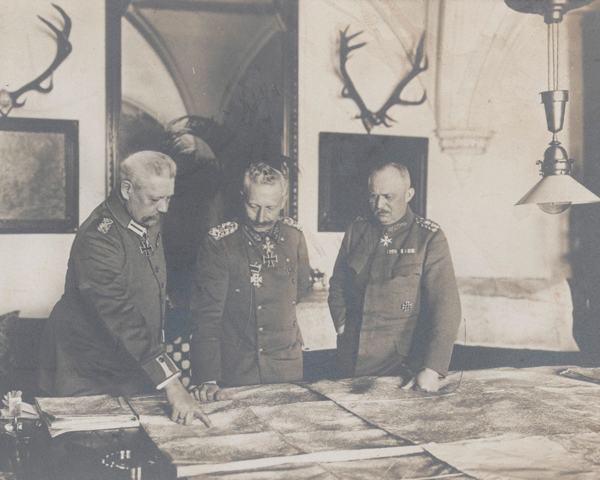
The withdrawal of Russia from the war in 1917 released substantial numbers of German troops for use elsewhere. Aware that submarine warfare had failed to defeat Britain and that large numbers of American troops would soon be committed to the war, the Germans prepared for their final offensive in the west.
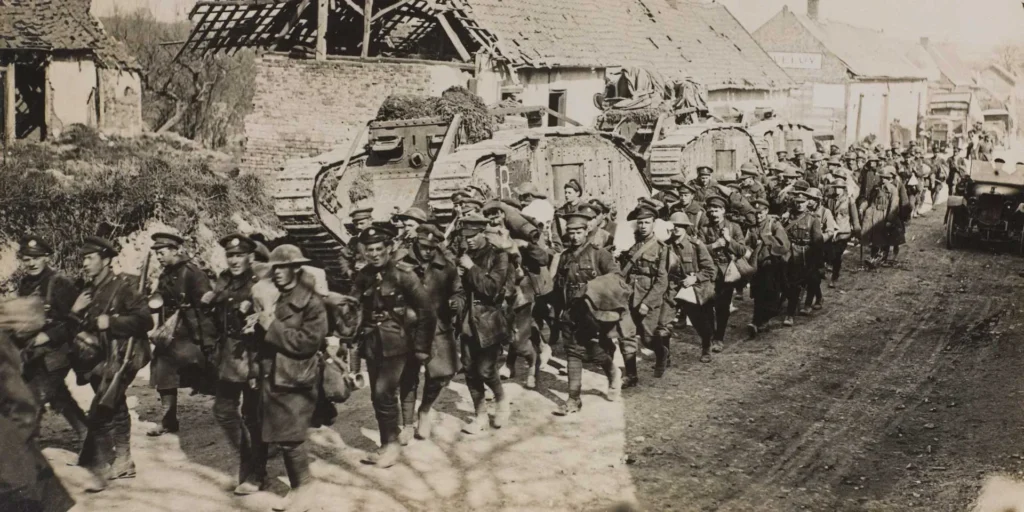
Field Marshal Haig’s British divisions were all under-strength in infantry. The government was unwilling to send more troops to the Western Front so Haig was forced to reduce the number of infantry battalions in his divisions from 12 to nine.
A weakened line
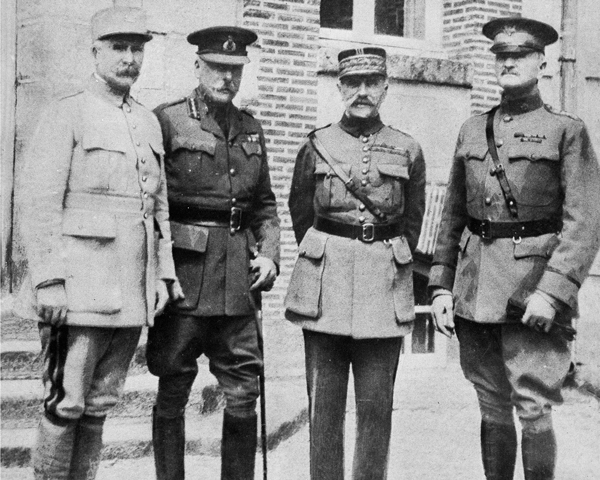
In mid-February 1918, 81 German divisions faced Haig’s 59 and for the first time in three years the British had to prepare to face a major attack. Haig could not afford to give ground near to the Channel coast, so the northern sector of his front was most heavily defended. Further south his forces were more thinly spread.
General Plumer’s Second Army, around Ypres, had to hold 37km (23 miles) of line with 14 divisions. Whereas, south of Cambrai, General Gough’s Fifth Army only had 14 divisions with which to hold 67km (42 miles).
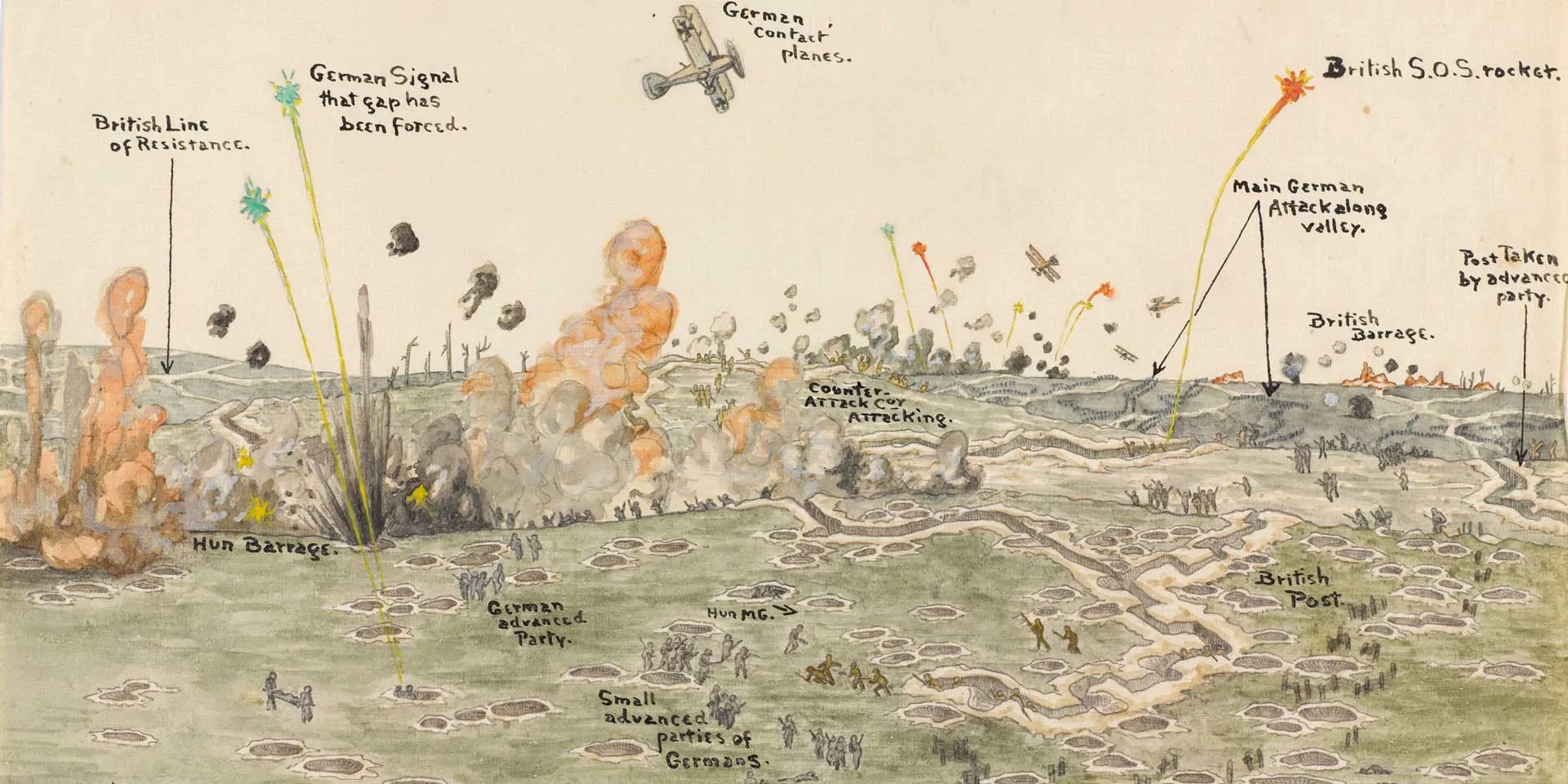
Spring Offensive
On 21 March 1918, the Germans launched Operation Michael. Around 10,000 guns fired over a million shells in five hours against General Byng’s Third and General Gough’s Fifth Armies. Then, 47 German divisions attacked.
The intense ‘hurricane’ bombardments targeted artillery and machine-gun positions, headquarters, telephone exchanges, railways and communication centres. This undermined any chance of concerted British resistance.
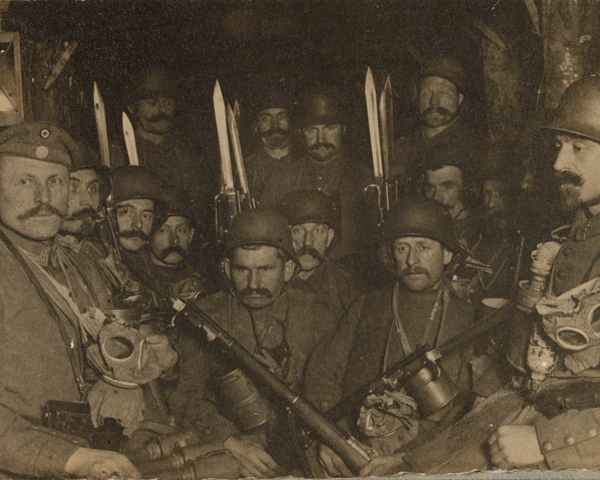
Storm troops
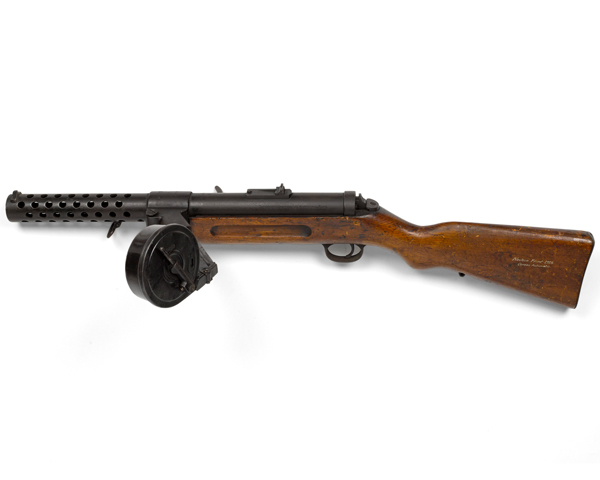
Heavily armed German ‘storm troopers’ then infiltrated weak-points in the line. They by-passed pockets of resistance and broke through the British trench system, leaving subsequent waves of troops to ‘mop up’ any enemies to their rear.
Lacking reserves, Gough’s line soon gave way. By the evening of 23 March the Germans had advanced up to 19km (12 miles) in some sectors.